
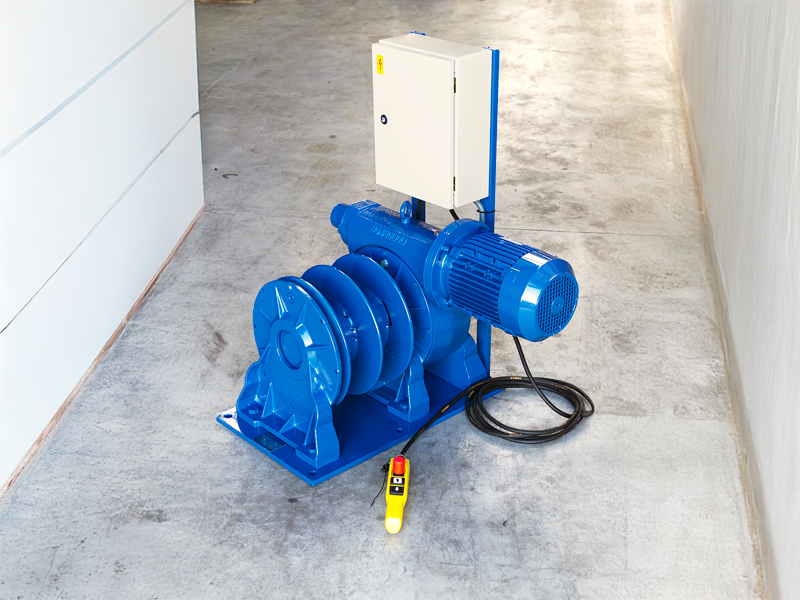
To choose the right industrial winch, determine the required line pull, identify whether you are lifting or hauling, and select the appropriate drive system (electric, hydraulic or air). You should also consider gear type, drum capacity, duty cycle and operating environment to ensure safe and efficient performance.
How do you choose the perfect industrial winch?
Selecting the right industrial winch is critical to ensuring safe, efficient and reliable operations. In demanding industries such as mining, marine and construction, an incorrectly specified winch can lead to downtime, safety risks and unnecessary operational costs.
Choosing the right solution requires more than just selecting a winch with sufficient capacity. It involves understanding your application, operating environment and performance requirements. This guide outlines the key factors to consider when specifying an industrial winch.
Step 1 – Understand Line Pull and Application Type
The foundation of winch selection is calculating line pull—the force required to move or lift a load.
- Lifting applications are based primarily on the weight of the load
- Hauling applications must factor in friction, gradients and rolling resistance
For example, moving a load along an incline often requires more force than lifting the same load vertically. Miscalculating line pull is one of the most common causes of underperforming equipment and operational inefficiencies.
Ensuring accurate calculations at this stage is essential for both safety and performance.
Step 2 – Choose the Right Drive System
Industrial winches are typically powered by one of three drive systems. The right choice depends on your operating environment and duty requirements.
Electric Winches
- Ideal for controlled environments such as workshops and processing facilities
- Reliable and efficient for consistent, repeatable operations
Hydraulic Winches
- Deliver high powe for heavy-duty applications
- Suitable for continuous operation in harsh environments such as mining and marine
Air Winches
- Powered by compressed air, making them suitable for hazardous environments
- Commonly used in oil & gas, chemical and explosive atmospheres where electrical equipment is not suitable
Step 3 – Select the Right Gear System
The gear system plays a key role in determining efficiency, control and safety.
Worm Gear
- Provides inherent load-holding (self-braking) capability
- Ideal for lifting applications requiring high control
- Typically lower efficiency but greater safety for static loads
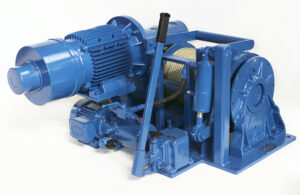
Planetary Gear
- Compact, high-efficiency design
- Suitable for high-speed and continuous-duty applications
- Commonly used in marine, offshore and heavy industrial operations
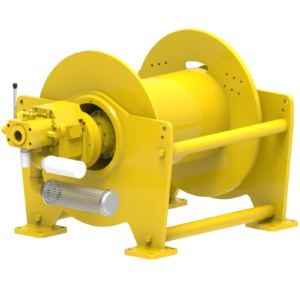
Selecting the right gear system ensures your winch performs reliably under load while maintaining operational control.
Step 4 – Consider Drum Capacity & Rope Management
Drum design and rope handling are critical for long-term performance and safety.
Key considerations include:
- Drum size and flange height – determines rope capacity
- Groove vs smooth drums – affects spooling behaviour and rope wear
- Fleet angle – impacts rope alignment and service life
Poor rope management can lead to uneven spooling, increased wear, higher maintenance costs and potential safety risks. Download our catalogue here.
Continue into Part 2.
In Part 2, we will cover additional factors including duty cycle, environmental considerations, control systems and customisation options to help you finalise your winch selection.
Need Expert Advice?
Choosing the right industrial winch requires a combination of engineering expertise, application knowledge and long-term planning. By carefully considering line pull, drive system, gear type and drum configuration, you can ensure your equipment operates safely and efficiently.
If you are planning a project or need assistance specifying the right solution, our team can provide expert guidance and customised recommendations tailored to your application.
Call us on 1300 157 535 or click here to send an email.